• Skip to primary navigation
  • Skip to main content
  • Skip to primary sidebar

Cosmic Pursuits

Basic astronomy and night sky information

  • Subscribe
  • Start Here
  • Articles
  • Sky This Month
  • Courses
  • About
  • Contact

Deep Sky Observing

Articles about how to understand, find, and see celestial objects including stars, galaxies, nebulae, and star clusters with binoculars, telescopes, and the naked eye.

The Veil Nebula

October 28, 2020 by Brian Ventrudo Filed Under: Deep Sky

The Veil Nebula in the constellation Cygnus. The right section (NGC 6960) overlaps with the star 52 Cygni. The brighter arc at left is NGC 6992. In between lies Pickering’s Triangle. Click image to enlarge in a new window. Image credit: Brian Ventrudo/Cosmic Pursuits.

“It’s better to burn out than to fade away”, as Neil Young once said, and when it comes to burning out nothing beats a big star that blows up as a supernova. These catastrophic events occur as big stars run out of fuel in their core and become unable to hold themselves up against the relentless pull of their own gravity. Their outer layers collapse, crush the star’s dense core into a neutron star or black hole, then snap back in a violent explosion that eject as much energy in a few minutes as our sun does in its entire lifetime.

Since only the largest stars expire like this, and since the explosion itself plays out quickly over a few days or weeks, a supernova is a relatively rare event: the last known supernova in the Milky Way happened more than 400 years ago. But such explosions often leave a long-lasting imprint in the form of a visible nebula caused by the rapidly expanding shock wave of the exploding star colliding with and setting aglow the rarefied gas of the interstellar medium. Dozens of these so-called supernova remnants fleck the night sky. Most require a big telescope and sensitive camera to detect, but one of the brightest and easiest to see lies off the eastern ‘wing’ of the constellation Cygnus, the Swan. This is the famous Veil Nebula, a sprawling complex of glowing gas and one of the most intricate and intrinsically beautiful objects in our galaxy [Read more…] about The Veil Nebula

Share This:
Facebooktwitterredditpinterestlinkedinmail

Filed Under: Deep Sky supernova, veil nebula

The ‘North America’ Nebula

August 18, 2020 by Brian Ventrudo Filed Under: Deep Sky

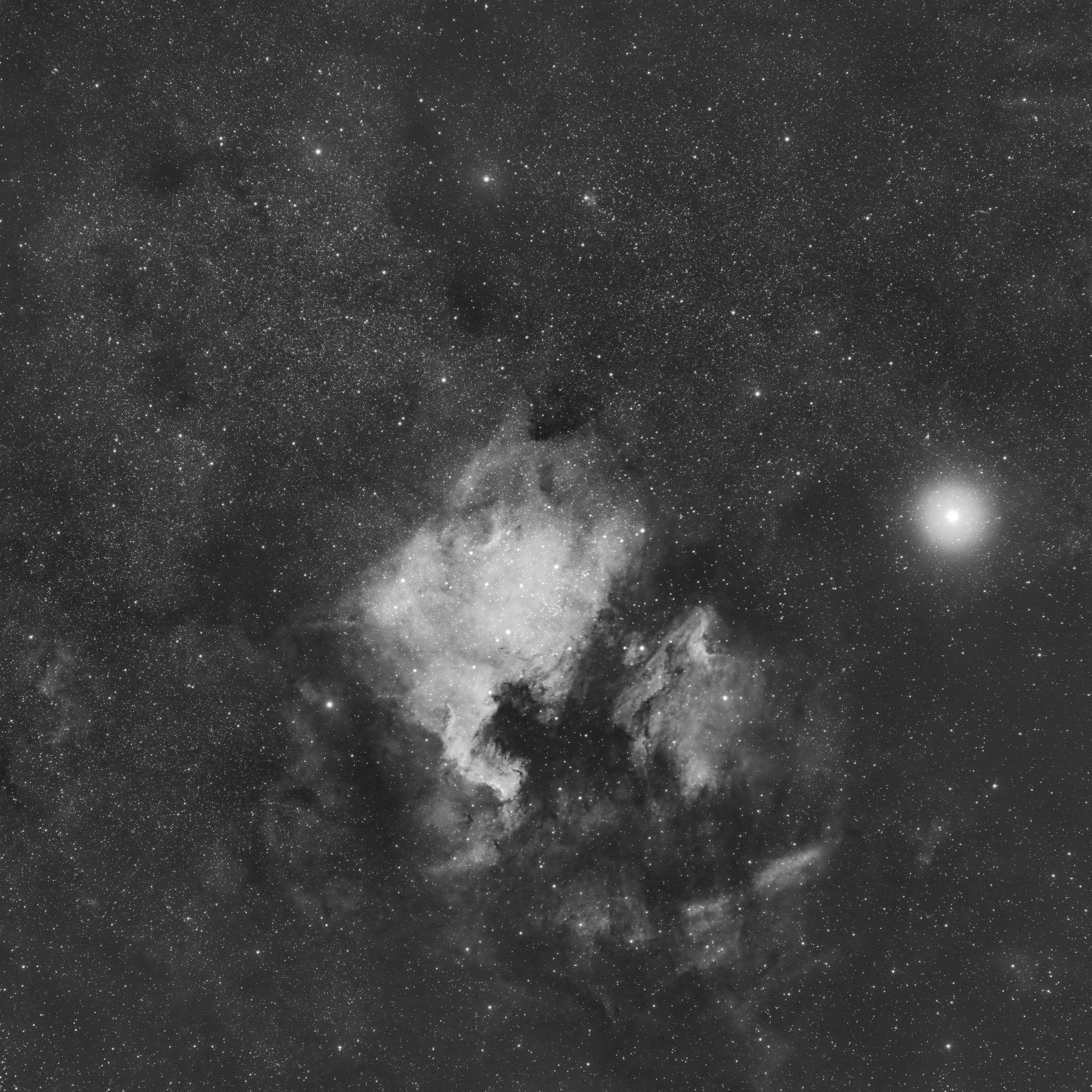
The North America Nebula and associated dark nebulae and star clouds in the constellation Cygnus. The bright star Deneb, at right, formed a halo as a result of passing haze during the imaging session. Image credit: Brian Ventrudo.

Just off the tip of the Northern Cross (or the tail of Cygnus, the Swan) lies the photogenic NGC 7000, an immense star-forming complex embedded in rarefied hydrogen gas set aglow by massive blue-white stars. This emission nebula has an evocative shape that resembles the continent of North America which lends its informal name. Unlike more compact and concentrated nebula like the Swan or Orion Nebulae, the North America Nebula is a challenging object to spot visually. But it’s always a treat to see its faint ethereal glow emerging from the starry background of the northern Milky Way. [Read more…] about The ‘North America’ Nebula

Share This:
Facebooktwitterredditpinterestlinkedinmail

Filed Under: Deep Sky

Edge-On Spirals Galaxies in the Northern Spring Sky

April 30, 2020 by Brian Ventrudo Filed Under: Deep Sky

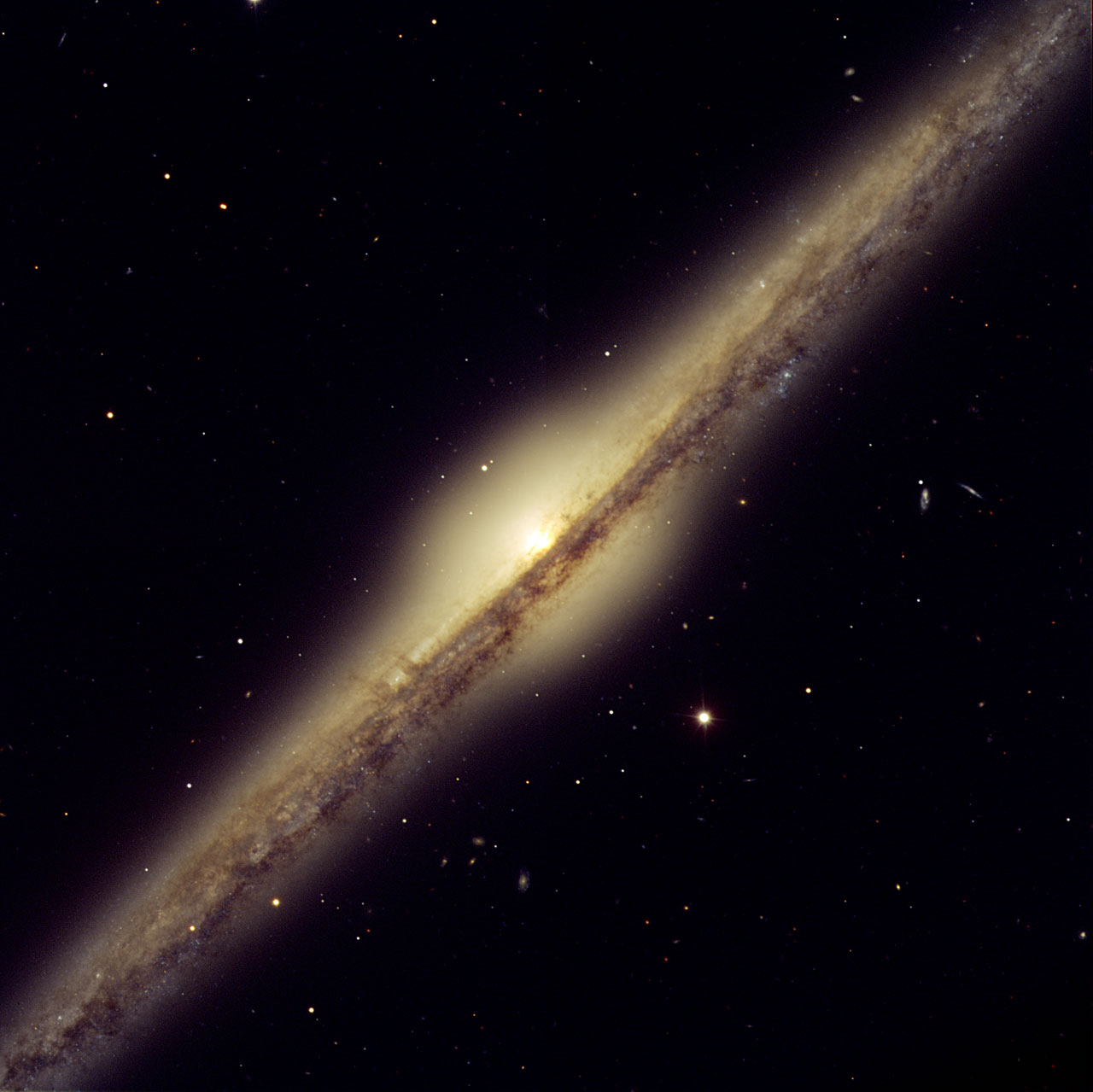
A close-up of NGC 4565 (the Flying Saucer Galaxy), an edge-on spiral in Coma Berenices. Image credit: ESO.

The great amateur astronomer Leslie Peltier once suggested a cure for many of the world’s problems is simply “one gentle dose of starlight to be taken each night just before retiring”. If you feel the need for a little starlight these days, there is no better bang for your buck than looking at galaxies. Northern spring is the perfect time for observing these immense collections of billions of stars, hundreds of which lie within easy reach of a small telescope (thousands if you’re using a camera instead of an eyepiece) [Read more…] about Edge-On Spirals Galaxies in the Northern Spring Sky

Share This:
Facebooktwitterredditpinterestlinkedinmail

Filed Under: Deep Sky eaa, spiral galaxy

Hopping Double Stars in Cassiopeia

February 26, 2020 by Brian Ventrudo Filed Under: Deep Sky

White arrows point to the objects in this brief tour of the constellation Cassiopeia. Created with SkyX by Software Bisque.

When time is tight and the weather turns cold, I turn to a class of celestial objects that are very forgiving of observing conditions, light pollution, and telescope aperture: double and multiple stars. There are thousands of these objects visible during the year. Many are run-of-the-mill sights. But many more present a lovely appearance in a small telescope, revealing color, brightness contrast, and a jewel-like appearance that appeal to the artistically inclined while also packing plenty of physics and sheer challenge to the observer.

In this instalment of Cosmic Pursuits, I share with you three double and multiple stars in and around the throne of the legendary Ethiopian queen (along with a couple of extraordinary ‘bonus objects’). So grab a small telescope and head out to see them for yourself. The map above shows you where to find these relatively bright star systems and ‘bonus objects’… [Read more…] about Hopping Double Stars in Cassiopeia

Share This:
Facebooktwitterredditpinterestlinkedinmail

Filed Under: Deep Sky cassiopeia, sky tour, star clusters

Faint Fuzzies in and Around Pegasus and Andromeda

December 23, 2019 by Joe Bergeron Filed Under: Deep Sky

The globular cluster M15 in the constellation Pegasus.
Image credit: Joe Bergeron.

I write this in late October. Every night, the sky is four minutes more wintry than it was the night before. For now, the sky is still dominated by the constellations most associated with Autumn, even as the Summer Triangle slides past the meridian and the Pleiades rise in the east.

The constellations of northern autumn, Pegasus and Andromeda, linger well into the winter months and offer many deep sky wonders for observers equipped with a good telescope. One recent autumn evening, as the Pleiades rose in the east, I set about looking for a handful of these sights in my 8-inch Edge HD Schmidt-Cassegrain telescope [Read more…] about Faint Fuzzies in and Around Pegasus and Andromeda

Share This:
Facebooktwitterredditpinterestlinkedinmail

Filed Under: Deep Sky

  • « Go to Previous Page
  • Go to page 1
  • Interim pages omitted …
  • Go to page 6
  • Go to page 7
  • Go to page 8
  • Go to page 9
  • Go to page 10
  • Interim pages omitted …
  • Go to page 21
  • Go to Next Page »

Primary Sidebar

Subscribe to Cosmic Pursuits

Subscribe to our e-mail newsletter for free astronomy tips and updates

Featured Astronomy Course


Search This Site

Recent Posts

  • Noctilucent Clouds – Marvels of the Mesosphere
  • Hopping Galaxies in the Bear’s Den
  • A Dazzling New View of the Sombrero Galaxy
  • NEAF 2026 Overview and Recap
  • If You Could Have Only One Reflector…

Copyright © 2026 Mintaka Publishing Inc.