• Skip to primary navigation
  • Skip to main content
  • Skip to primary sidebar

Cosmic Pursuits

Basic astronomy and night sky information

  • Subscribe
  • Start Here
  • Articles
  • Sky This Month
  • Courses
  • About
  • Contact

Deep Sky Observing

Articles about how to understand, find, and see celestial objects including stars, galaxies, nebulae, and star clusters with binoculars, telescopes, and the naked eye.

Contemplating the “Harp Star”

October 17, 2021 by Brian Ventrudo Filed Under: Deep Sky

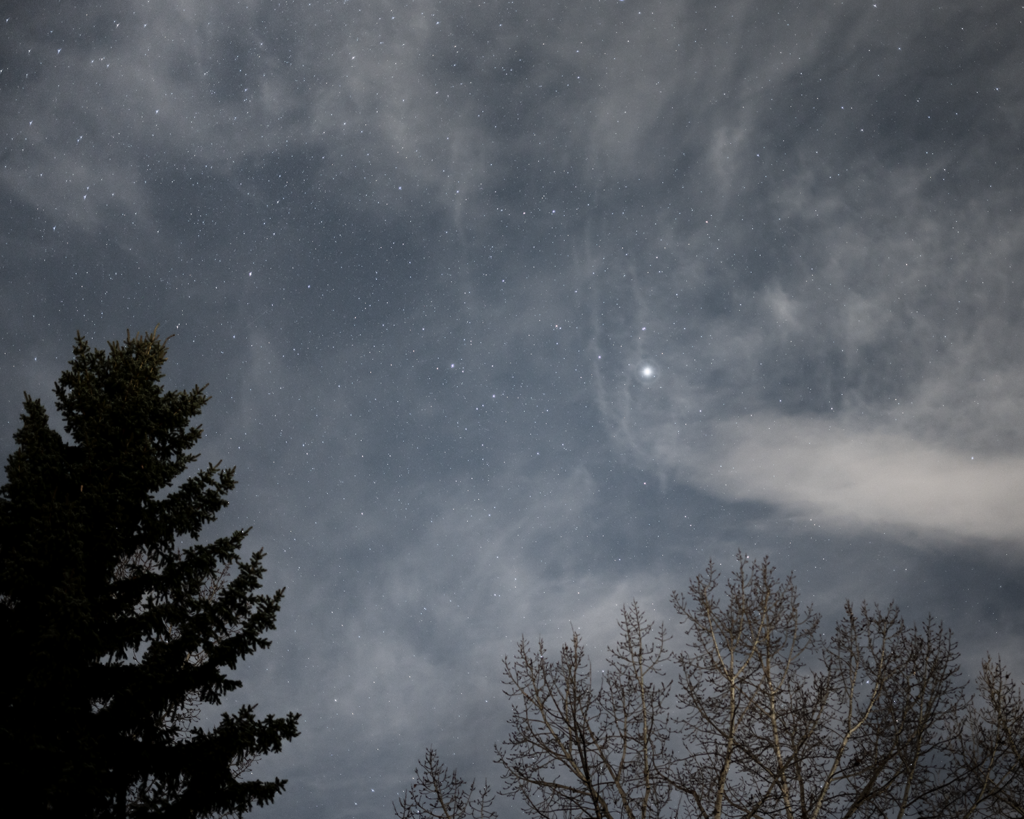
Vega, the brightest star in the constellation Lyra.

“Out on the lawn I lie in bed, Vega conspicuous overhead…” -W.H. Auden

I see plenty of stars in my line of work, and I’ve yet to see one I don’t like. But if had to choose a favorite, it would be the dazzling star Vega, the jewel of the tiny constellation Lyra, the Lyre. Intensely bright and blue-white in color, Vega conjurs memories of pleasant summer evenings spent stargazing and offers astronomers a remote stellar laboratory to help understand how stars evolve [Read more…] about Contemplating the “Harp Star”

Share This:
Facebooktwitterredditpinterestlinkedinmail

Filed Under: Deep Sky

The Crescent Nebula

September 17, 2021 by Brian Ventrudo Filed Under: Deep Sky

The Crescent Nebula (NGC 6888).

Of the many deep-sky sights in the constellation Cygnus along the rich band of the northern Milky Way, the Crescent Nebula (NGC 6888) isn’t the biggest or brightest, but it still finds its place on the target list of many astrophotographers and visual observers. This shimmering and intricate arc of glowing gas presents a rare example of a massive star in its end stages as it ejects mass at a furious rate on its way to a violent demise as a supernova.

[Read more…] about The Crescent Nebula

Share This:
Facebooktwitterredditpinterestlinkedinmail

Filed Under: Deep Sky astrophotography, deep sky, nebula

The ‘Intergalactic Wanderer’

March 24, 2021 by Brian Ventrudo Filed Under: Deep Sky

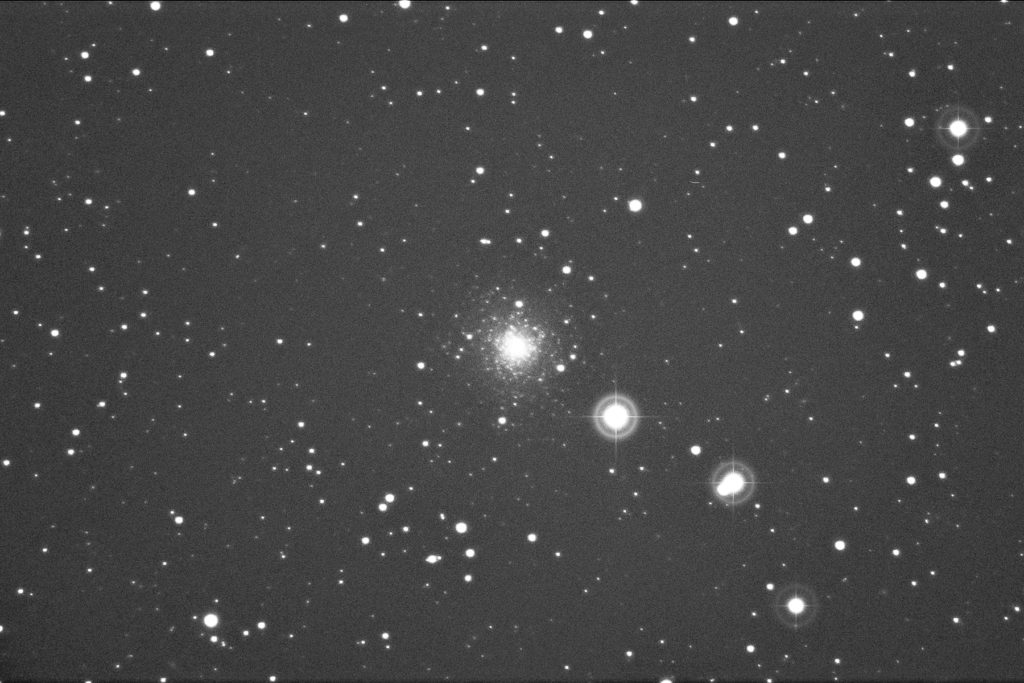
A snapshot of NGC 2419, the ‘Intergalactic Wanderer’, captured with an 85mm refractor and ZWO ASI290MM camera.

Conjured by Johann Hevelius in the late renaissance, the dim, linear constellation Lynx fills in the space between the much larger constellations Gemini, Auriga, and Ursa Major, just out of the plane of the northern Milky Way. While it doesn’t much resemble its namesake and contains no bright stars, Lynx harbors one of our galaxy’s most distant outliers, the famous ‘Intergalactic Wanderer’ (NGC 2419), a globular cluster that roams the desolate expanse between the Milky Way and the Andromeda Galaxy [Read more…] about The ‘Intergalactic Wanderer’

Share This:
Facebooktwitterredditpinterestlinkedinmail

Filed Under: Deep Sky globular clusters, ngc2419

Sightseeing along the Perseus Arm of the Milky Way

February 26, 2021 by Brian Ventrudo Filed Under: Deep Sky

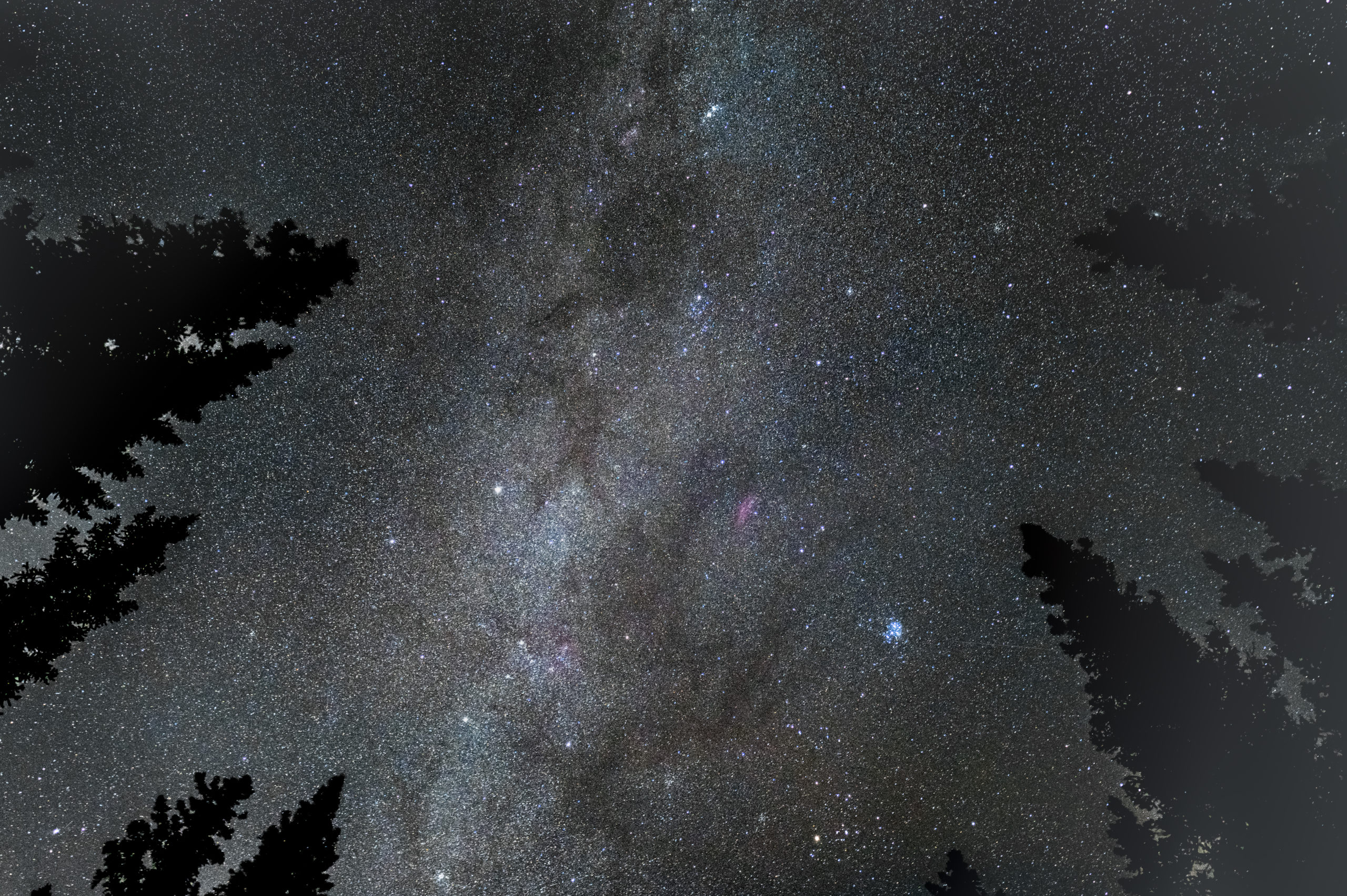
A section of the Perseus Arm of the Milky Way looking overhead from the northern hemisphere in winter.

In the early months of each year, stargazers south of the equator enjoy a dazzling view of a rich part of the Milky Way, one that’s festooned with open star clusters, emission nebulae, and bright blue-white stars. Here, in the constellations Centaurus and Crux, we gaze into one of the two major spiral arms of the Milky Way, the Scutum Centaurus Arm, that originates from the long bar of ancient stars at the core of our galaxy.

An observer looking overhead in the northern hemisphere sees a completely different perspective. Here the view lies in a direction away from the center of the galaxy into the outer reaches of the Perseus Arm, the second major spiral arm that emanates from the galactic core [Read more…] about Sightseeing along the Perseus Arm of the Milky Way

Share This:
Facebooktwitterredditpinterestlinkedinmail

Filed Under: Deep Sky

The Taurus Molecular Cloud

January 25, 2021 by Brian Ventrudo Filed Under: Deep Sky

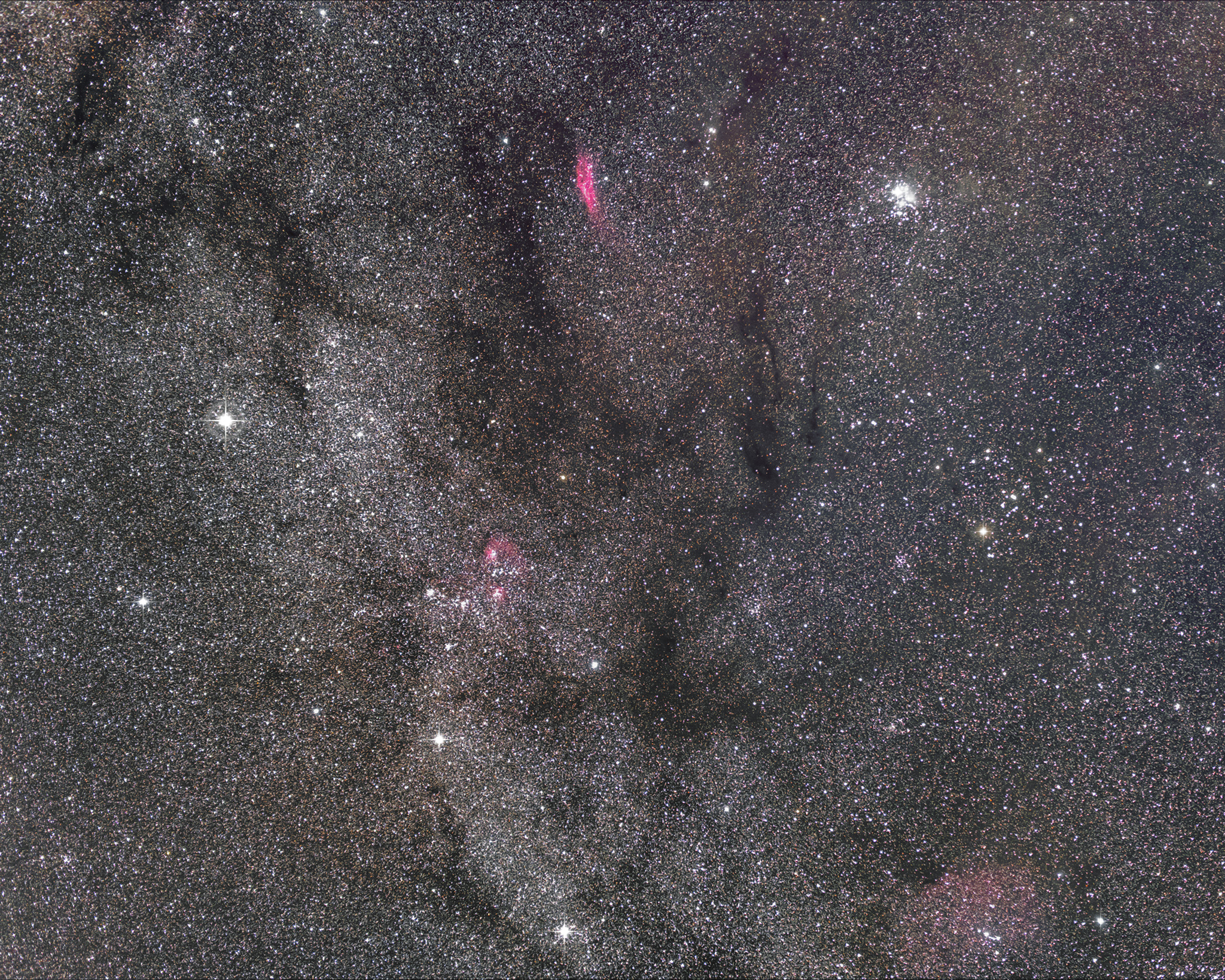
The Taurus Molecular Cloud, to the lower left of the Pleiades and lower right of the California Nebula in this wide-field image. The Hyades star cluster in Taurus is at middle right; the star Capella in the constellation Auriga is the bright star at left. Image credit: Brian Ventrudo

Not far from the Pleiades and Hyades star clusters along the northern Milky Way lies the coal-black fingers of the Taurus Molecular Cloud, the nearest star-forming region to Earth. Unlike the more famous Orion star factory, with the dazzling Orion Nebula and associated bright blue-white stars, the TMC is not well known to most stargazers. That’s because it doesn’t offer much to see, with no bright nebulae and just a dark and sooty network of tendrils that span more than 30o of sky. But the TMC is the nearest star-forming region to Earth, making it of considerable interest to astronomers. It’s also a rewarding target for astrophotographers who can capture its structure against the starry background in the constellations Taurus and Auriga [Read more…] about The Taurus Molecular Cloud

Share This:
Facebooktwitterredditpinterestlinkedinmail

Filed Under: Deep Sky dark nebula, reflection nebula, taurus

  • « Go to Previous Page
  • Go to page 1
  • Interim pages omitted …
  • Go to page 5
  • Go to page 6
  • Go to page 7
  • Go to page 8
  • Go to page 9
  • Interim pages omitted …
  • Go to page 21
  • Go to Next Page »

Primary Sidebar

Subscribe to Cosmic Pursuits

Subscribe to our e-mail newsletter for free astronomy tips and updates

Featured Astronomy Course


Search This Site

Recent Posts

  • IC 4665, the “HI” Star Cluster
  • Noctilucent Clouds – Marvels of the Mesosphere
  • Hopping Galaxies in the Bear’s Den
  • A Dazzling New View of the Sombrero Galaxy
  • NEAF 2026 Overview and Recap

Copyright © 2026 Mintaka Publishing Inc.