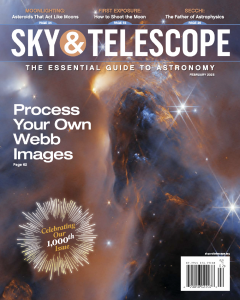
Reflection nebulae have an undeniable allure to visual observers and astrophotographers. These little blisters of blue-white light, though typically small and rather challenging to detect, offer a chance to glimpse the galaxy at work turning cold dust and gas into new star systems. So grab your telescope and let’s take a tour of some reflection nebula prominent in northern winter with my recent article published in the 1,000th issue of Sky & Telescope magazine. Click on the image to the left to download the article on PDF format (it’s about 6MB). Then enjoy the tour!
Archives for January 2025
Gaia Space Telescope Simulation of the Milky Way
Enjoy this spectacular new artist’s animation of the Milky Way Galaxy based on data from ESA’s Gaia space telescope. Gaia has changed our impression of the Milky Way. Even seemingly simple ideas about the nature of our galaxy’s central bar and the spiral arms have been overturned. Gaia has shown us that it has more than two spiral arms and that they are less prominent than we previously thought. In addition, Gaia has shown that its central bar is more inclined with respect to the Sun. No spacecraft can travel beyond our galaxy, so we can’t take a selfie, but Gaia is giving us the best insight yet of what our home galaxy looks like. Once all of Gaia’s observations collected over the past decade are made available in two upcoming data releases, we can expect an even sharper view of the Milky Way.
Share This:Guide to Observing Mars in 2025

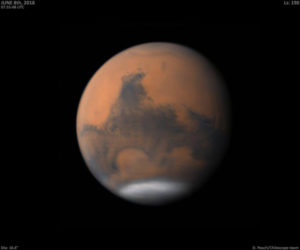
The planet Mars is one of the most interesting planets to observe with a small telescope, but also one of the most difficult. The planet only gets close enough to Earth to give up much detail just once every 780 days (about two years and two months), and when it does make an apparition, it still appears relatively small compared to Jupiter or Saturn. But observing Mars is worth the effort. It’s the only planet to reveal an appreciable amount of surface detail in a small telescope, and it also features occasional surprises such as dust storms and local fogs and cloud banks.
Seeing Mars takes a little practice, however, as well as the right tools for the job. This guide will help you understand what you can see on the surface of Mars, especially near the opposition of January 15-16, 2025. And it will help you get the best view of this remarkable world with a telescope and a few essential accessories [Read more…] about Guide to Observing Mars in 2025
Share This: