Like the drift of the continents or the erosion of great mountain ranges on Earth, the motion of the stars across the sky is almost imperceptibly small over the paltry span of a human lifetime. But in this quite astonishing video made with data from the European Space Agency’s (ESA’s) Gaia spacecraft, which compresses 5 million years of star motion into a few minutes, you can see more than 2 million stars move across the sky like grains of pollen floating in a breeze. It is mesmerizing (and unexpectedly calming) [Read more…] about Moving Stars
Share This:Recent Astronomy Articles at Cosmic Pursuits
The Blue-Green Beauty of Planetary Nebulae

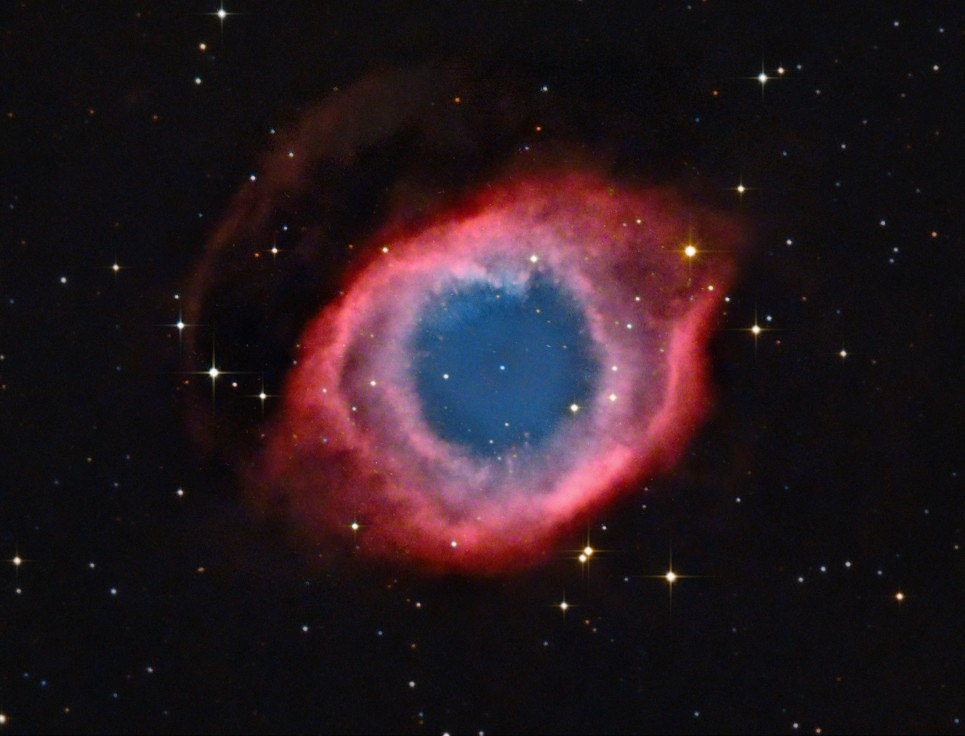
New and would-be amateur astronomers are often mystified and disappointed by the lack of color in things they see through their telescopes. And why shouldn’t they be? Popular astronomy shows, magazines, and web sites encourage people to believe that celestial objects are rich with blistering, saturated color, much like the image above. Why doesn’t that new $400 8-inch Dobsonian show bright pink nebulae, and galaxies of blue and gold? [Read more…] about The Blue-Green Beauty of Planetary Nebulae
Share This:Moon Viewing on the Streets of L.A.
A New View of the Moon from Alex Gorosh on Vimeo.
Here’s a short video to brighten your day. The writer and film maker Wylie Overstreet took his big 12″ Newtonian telescope into the streets of Los Angeles to show the Moon to passersby. The result? Well, see for yourself. But it’s nice to know that so many overstimulated city dwellers can still enjoy nature at its finest.
You can see a thousand pictures of the Moon, but it’s never the same experience as seeing it for yourself, especially through a good telescope. Even if you don’t know the name of a single crater or sea, the Moon’s stark beauty, the etched features and long shadows and large range of gray scale and brightness, make it one of the most appealing and accessible sights in the sky. And as more experienced stargazers know, you can get the same experience when seeing much fainter objects. With a little practice, of course.
This fine little production is a great reminder that we should look up more often. And when possible, share what you see with those around you.
Share This:
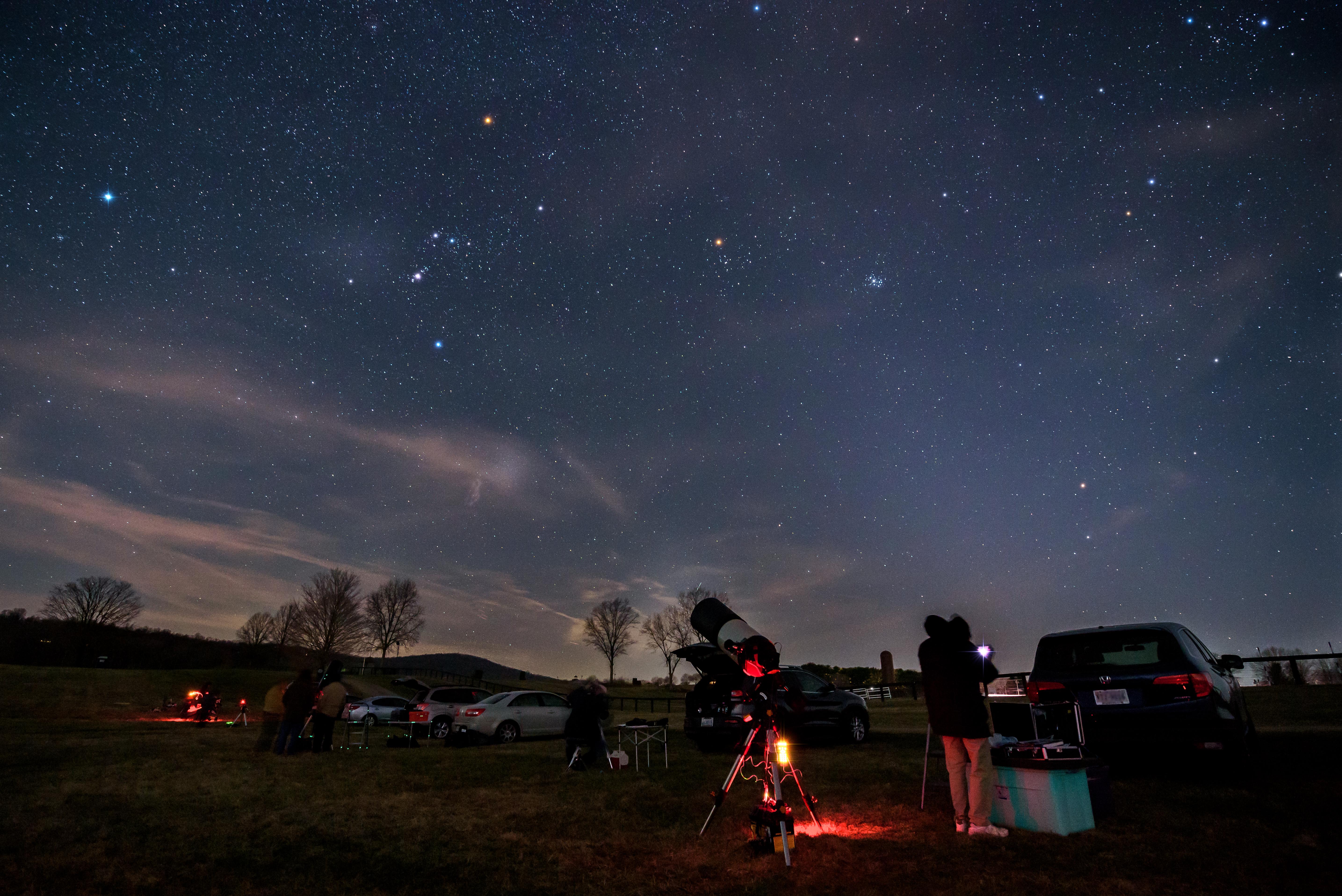
Stargazers at Work

The winter stars set in the southwestern sky in the mid-evening hours of late winter as seen from Northern Virginia. Here you see the stars of the constellations Canis Major, Monoceros, Orion, and Taurus, among others, as well as the Pleiades star cluster. Outreach events such as these are superb opportunities for newcomers to stargazing to learn and gain inspiration. And they help experienced stargazers hone their craft and reconnect with their passion with for the night sky.
Share This:The Man of Mars – Percival Lowell and the Invention of the Red Planet

More than most planets, Mars has captured the public imagination as a place of mystery, a target of exploration, and possibly the only other place in the solar system that may have once harbored life. The planet figured prominently in science fiction, from the early tales of E.R. Burroughs and H.G. Wells to the latest work of Andy Weir. And Mars is now on the radar of hands-on visionaries like Elon Musk who plan to colonize the planet in the coming decades. The popular fascination with Mars began more than a century ago in the fertile imagination of Percival Lowell, a wealthy and intellectually restless astronomer who speculated about intelligent life on Mars and left a lasting legacy for astronomy. [Read more…] about The Man of Mars – Percival Lowell and the Invention of the Red Planet
Share This: